Mga Obrang Hors de Combat
Solo-exhibition, Gravity Art Space, January 2026
1/28/20262 min read
The Combatant’s Memory Foretold
by Ricky C. Ornopia
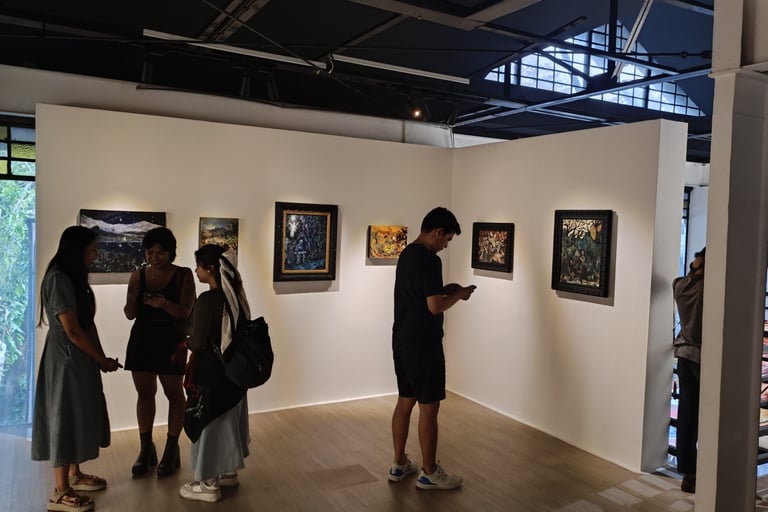
Job Abednego David’s first one man show presents framed recollections emerging from his engagements in the countryside, spaces historically positioned outside dominant metropolitan narratives. These works function not only as personal memory but as visual testimonies shaped by and responding to the material conditions of a historical project.
David’s artistic formation is influenced by his admiration for Edvard Munch and Jaime de Guzman. He reconfigures their expressionistic tendencies through his own lived experience, producing an expressionistic reality rooted in affect, memory, and social contradiction rather than formal aesthetics alone.
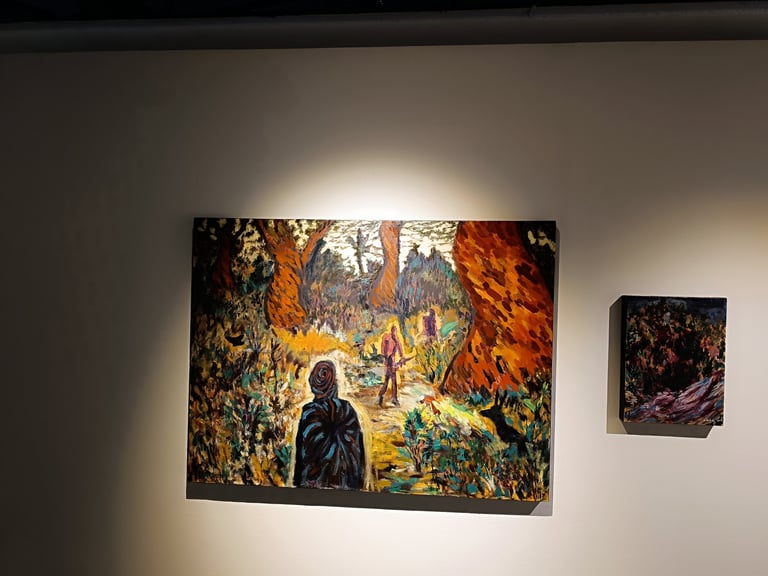
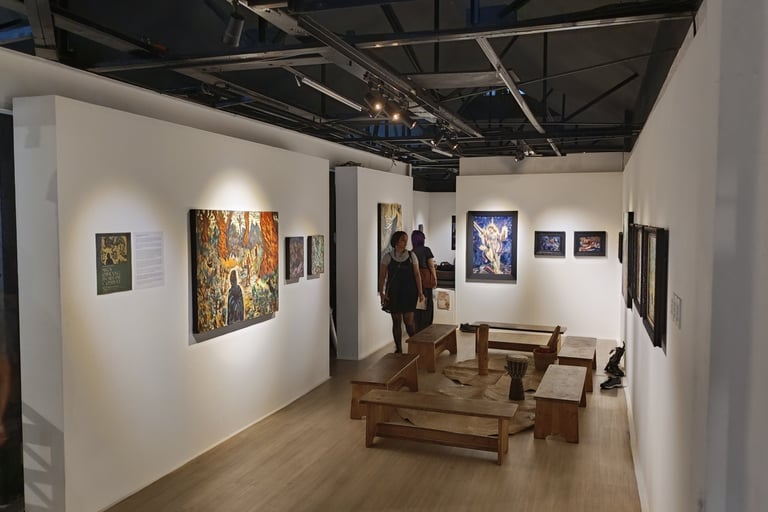
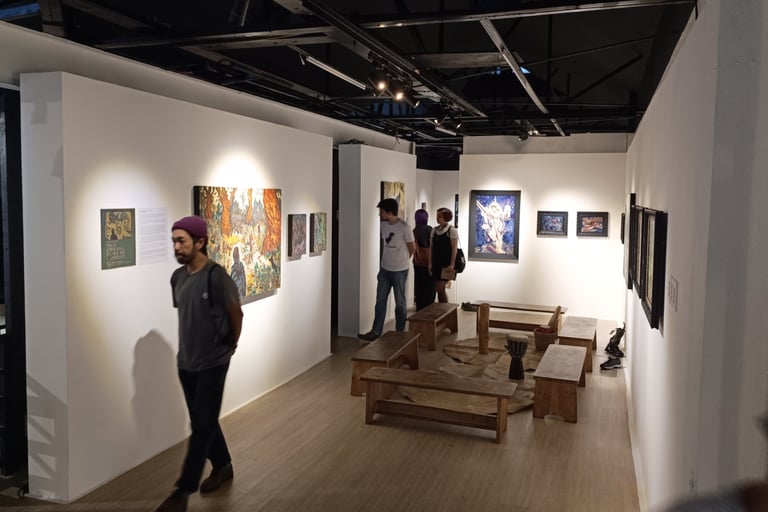
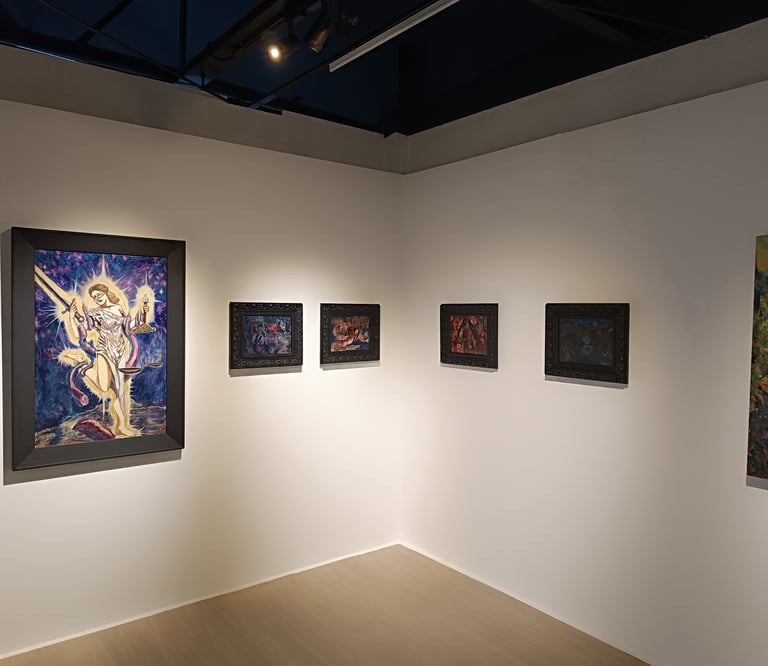
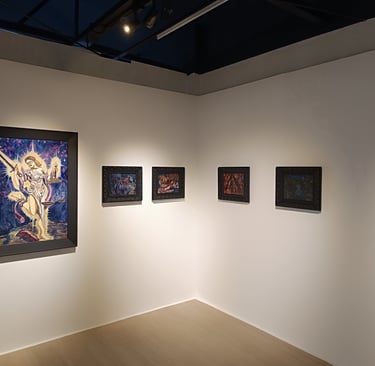
The varying sizes of the canvases foreground the material conditions of artistic production. The small framed works were produced during David’s imprisonment after his capture while unarmed in Mt. Malaglag Bongabong, by the repressive state apparatuses in Oriental Mindoro. Created under conditions of severe constraint including limited resources, restricted space, surveillance, and restraint in discussing progressive or left-leaning ideas, these works demonstrate how artistic labor persists within carceral and repressive structures. Nearly a year of disciplined practice passed before his name was cleared of legal cases and he was able to return to civilian life. Only then did he acquire the spatial and material capacity to expand his vision.
Mga Obrang Hors de Combat articulates narratives of spaces, communities, and ecologies excluded from metropolitan consciousness. These include townsfolk, landscapes, flora, and fauna rendered invisible by dominant urban centered cultural production. David introduces the viewer to the lived realities of the masa in the peripheries of the countryside such as indigenous peoples, women, children, peasants, and the Pulang Mandirigma, figures often reduced to abstractions within state propaganda and media discourse.
David’s body of work operates within a war of position, understood as a prolonged struggle over meaning, representation, and consciousness within civil society. His paintings narrate the contradictions of life in the navel of the margins, where oppression and resistance coexist and where subaltern subjects negotiate survival under hegemonic power.
It is precisely the artist’s lived immersion in these conditions that produces an aura that cannot be replicated through stylistic imitation alone. Unlike others who approach similar subjects from a distance, the practice emerges from within the struggle itself, allowing the works to function as interventions against cultural hegemony.
To tell stories from the peripheries, he overcomes all restrictions, whether material, ideological, or institutional. His work creates a space where art engages in dialogue, expands possibilities for meaning-making, and fosters community empowerment.